



Women at the Centre of South Africa’s Critical Minerals Opportunity
The future of South Africa’s minerals economy will depend not only on what lies beneath the country’s soil, but on the people who have the expertise, ambition and innovation to turn those resources into greater economic value.
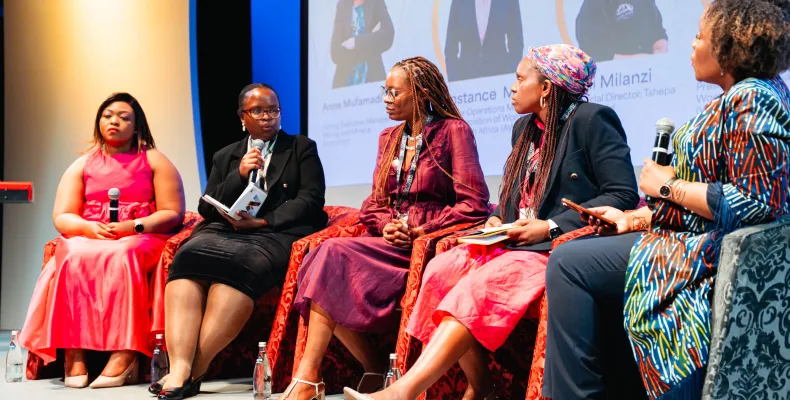
This was a central message at the Mintek Women in Minerals Engagement, held on 27 August 2026 at The Venue, Melrose Arch, Johannesburg, which brought together women leaders, entrepreneurs, government representatives and industry stakeholders to explore opportunities for women to play a greater role in shaping the country’s minerals future.
The high level engagement took place at an important moment for South Africa, as the country seeks to move beyond the traditional model of extracting and exporting raw materials towards greater local processing, beneficiation, manufacturing and value creation. The recently approved Critical Minerals and Metals Strategy reinforces this ambition, identifying the development of local capabilities and value added mineral products as important components of South Africa’s future industrial growth.
Addressing the engagement, Deputy Minister of Mineral and Petroleum Resources, Phumzile Mgcina, called on business executives, investors and industry leaders to strengthen partnerships with research and development institutions such as Mintek to accelerate local beneficiation and ensure that more value is retained within South Africa.
“We cannot continue exporting the jobs, skills, technology, and wealth that should accrue to the people of South Africa,” she said.
The Deputy Minister also emphasised that women must be positioned at the centre of this transformation, with access to the skills, opportunities and leadership pathways required to contribute across the minerals value chain.
Her message extended beyond representation. As South Africa seeks to build capabilities in critical minerals, advanced materials, mineral processing, metallurgy, energy technologies and manufacturing, the country will require a highly skilled technical workforce capable of taking research and innovation from the laboratory into commercial and industrial applications.
This is where Mintek’s role becomes particularly important.
As South Africa’s national minerals research organisation, Mintek works across the minerals value chain, developing technologies and solutions that support mineral processing, metallurgy, beneficiation, technology development and commercialisation. Its work demonstrates the increasingly sophisticated technical capabilities required to transform South Africa’s mineral resources into higher value products.
Women are already making a significant contribution to this work.
Women constitute half of Mintek’s technical and scientific workforce, contributing to research and technology development across disciplines that are central to the country’s minerals and industrial ambitions. Their work includes areas such as pyrometallurgy, advanced materials, mineral processing, energy technologies and the recovery of valuable elements from secondary resources.
In pyrometallurgy, for example, principal scientist Dr Madinoge Mampuru is contributing to research in furnace technology and process optimisation, supporting efforts to improve the processing of complex mineral resources and unlock greater value through advanced metallurgical technologies.
Across Mintek, women scientists and engineers are also involved in the development of technologies and materials relevant to emerging value chains. This includes research into cathode materials for battery applications, platinum group metal catalysts for the hydrogen economy and approaches to recovering rare earth elements from waste streams such as coal fly ash.
These areas illustrate how the minerals industry is changing. The coal face of the future is no longer limited to the mine or processing plant. It increasingly includes the research laboratory, pilot facility, engineering environment, technology commercialisation process and boardroom where investment and industrial decisions are made.
The Women in Minerals Engagement explored how more women can access these opportunities and progress from participation to leadership, entrepreneurship and innovation.
The panel discussion, led by Mintek’s Head of Artisanal and Small Scale Mining, considered opportunities available to women in the sector, the challenges they face and the importance of strategic partnerships, networks and mentorship. Panellists highlighted the need for an enabling environment that provides women with access to skills, markets, finance, technical networks and opportunities to lead.
For South Africa, developing this pipeline is more than a transformation imperative. It is an economic necessity.
The country’s critical minerals ambitions will require scientists who can develop new processes, engineers who can optimise technologies, entrepreneurs who can commercialise innovations and leaders who can build businesses around locally developed capabilities. Women need to be present across this entire ecosystem.
At Mintek, human capital development is therefore closely linked to its broader mandate of innovation, beneficiation and technology commercialisation. Supporting women scientists, engineers and technical specialists strengthens the country’s ability to develop the skills and intellectual capital required to translate mineral resources into technologies, products and enterprises.
The opportunity extends beyond employment. When women are supported to lead research programmes, develop intellectual property, establish enterprises and participate in strategic decision making, they become active contributors to South Africa’s industrial capability.
The engagement also reinforced the importance of collaboration. Government, industry, research institutions, investors and entrepreneurs each have a role to play in creating an environment where technical expertise can be converted into commercially viable opportunities.
For Mintek, the message from the engagement is clear. South Africa cannot achieve its critical minerals and beneficiation ambitions by relying solely on the resources in the ground. It needs to invest in the people capable of transforming those resources into value.
Women are already contributing to that transformation in laboratories, pilot plants, technical teams and leadership structures across the minerals sector. The next step is to create more pathways for them to lead.
As South Africa positions itself for a new minerals economy, the question is no longer whether women belong at the coal face. They are already there. The imperative now is to ensure that they have the skills, opportunities, investment and influence to help design and drive what comes next.